
Guide
Winterising your pool: how to get your above-ground pool through winter
When the swimming season ends, winterising correctly determines how well your pool starts the next season. Find out which pools should be taken down and how to get permanent pools safely through the frost.
Updated 7 min readEditorial team wopool.de
Take it down or leave it up?
The first question depends on the pool type and the manufacturer's instructions. Quick-up pools and small frame pools are taken down in autumn: the material isn't designed for frost, and ice pressure would damage the liner and seams. According to the manufacturers, steel-wall pools and some large frame pools may stay up – with a lowered water level, winterising chemicals and a cover.
The water temperature determines the right time: once it stays below about 12 to 15 degrees Celsius, hardly any algae grow and you can winterise the pool. If you wait too long and an early frost arrives, the pump and pipes risk damage.
Option 1: Take the pool down and store it
For quick-up and most frame pools, proceed as follows:
- Stop adding chlorine a few days beforehand so the chlorine level drops
- Drain the water – follow local rules on disposing of pool water
- Clean the liner with a mild cleaner and a soft sponge
- Let everything dry completely, including folds and seams
- Fold the liner loosely without creasing it, and protect it from sticking with a little talc if the manufacturer recommends it
- Store frost-free, dry and protected from rodents
What to do with the pool water?
Chlorinated pool water shouldn't simply go into the nearest stream. Let the chlorine level drop for a few days before draining by not adding any more and leaving the pool uncovered in the sun. Whether you may then let the water soak into the garden or discharge it into the sewer is regulated by your municipality in Germany. Check with your water supplier or local council – discharging into the foul-water sewer is often permitted, whereas letting chlorinated water soak away is not allowed everywhere.
Option 2: Winterise the pool filled
Steel-wall pools and frame pools approved for winter stay filled so that the water pressure stabilises the wall. Here's how:
- Clean the pool thoroughly: vacuum the floor, clean the walls and waterline
- Adjust the pH and carry out a final shock chlorination
- Lower the water level below the skimmer and return nozzle
- Seal the return nozzle and skimmer with winter plugs
- Add winterising chemicals according to the manufacturer's instructions
- Put in ice compensators and a pool pillow inflated to about two thirds
- Stretch the winter cover over it and fasten it securely
Winterising products and pool chemicals
Ad All products linked with "View offer" are commission (affiliate) links: if you buy through them, we earn a commission – the price stays the same for you. As an Amazon Associate and eBay Partner Network affiliate we earn from qualifying purchases. Learn more




Pump, filter and hoses
The filter system is sensitive to frost and must be brought somewhere dry before the first frost. Backwash the sand filter one last time, drain all the water from the tank and pump and open all the drain plugs. Clean cartridges thoroughly or dispose of them if they're worn out. Empty the hoses, dry them and store them frost-free together with the pump and filter. On sand filters, set the multiport valve to the winter position recommended by the manufacturer to relieve the seals.
Accessories such as the ladder, solar absorbers, heat pump, pool robot and lighting also go somewhere dry. Store batteries from robots and sensors partly charged at room temperature.
Using the cover and pool pillow correctly
In winter the pool pillow does two jobs: it absorbs ice pressure, and it makes rain and meltwater run off the cover to the side. Only inflate it partly and tie it in the middle with ropes. The winter cover should be larger than the pool and secured with rope and eyelets or weights. Check the cover regularly over the winter and remove larger pools of water, snow or leaves so the cover isn't overloaded.
Winter covers, pool pillows and ice compensators
Ad All products linked with "View offer" are commission (affiliate) links: if you buy through them, we earn a commission – the price stays the same for you. As an Amazon Associate and eBay Partner Network affiliate we earn from qualifying purchases. Learn more
 Ad−38%
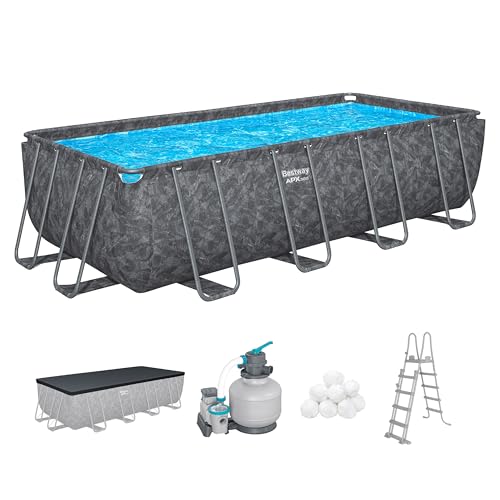
Bestway APX365 Winter-Proof Frame Pool Set, Sand Filter System …
 Ad−34%
Garden Pool Steel Frame Pool Complete Set with Filter Pump Chemical …
 Ad
Ad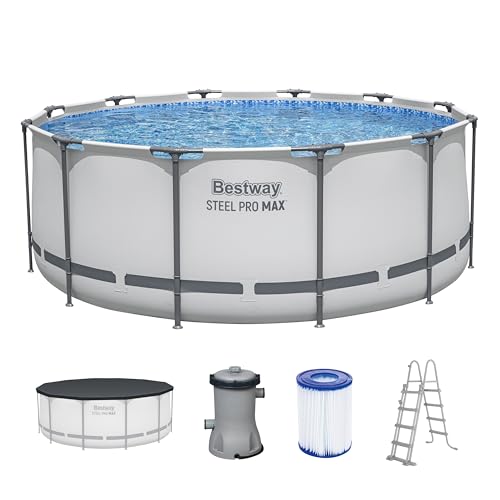 Ad−25%
Bestway Round Above-Ground Pool 366x122 cm, Complete Set with Filter Pump …
Common winterising mistakes
The most expensive mistake is water left in the pump, filter tank or pipes during frost – the ice bursts housings and pipes. A liner stored damp is just as problematic: it can go mouldy and stick together. If you empty a steel-wall pool completely, you risk the wall deforming or the liner shrinking and tearing. And if you forget the pool pillow, the ice sheet may press against the pool wall.
Starting the new season
In spring, when no more frost is expected, remove the cover and pool pillow, reconnect the filter system and top up the water to the normal level. Then do a thorough clean, adjust the pH and shock-chlorinate. After one to two days of filtering, the water is usually clear again. Pools that were taken down are set up again on the prepared, re-levelled ground.
Autumn is also a good time to buy missing accessories such as a new winter cover, spare cartridges or a more powerful pump. Keep an eye on price histories – many pool items get cheaper after the season.
Checklist: winterise your pool in an afternoon
With all the materials to hand, a steel-wall or frame pool can be winterised in a few hours. Get these things in advance:
- Enough winterising product for your pool volume
- Test strips for pH and chlorine
- Winter plugs for the skimmer and return nozzle
- Pool pillow and ice compensators
- Winter cover with rope or fastenings
- Floor vacuum, brush and skimmer net for the final clean
The pool in winter: check on it regularly
Even a well-prepared pool needs an occasional look in winter. After storms, check that the cover is still securely fastened and remove larger amounts of snow or leaves. If a lot of water collects on the cover, pump it off so it doesn't tear. If rain raises the water level in the pool significantly, lower it again below the skimmer and return nozzle.
A thaw followed by frost is the most critical phase: that's when particularly thick layers of ice form. The pool pillow and ice compensators should now be properly in place.
Protecting the liner and materials
UV radiation and cold make PVC brittle over time. An opaque winter cover protects the liner and also prevents algae growth, because no light gets into the water. For pools that are taken down: don't fold or move the liner in frosty weather, because cold PVC can crack. So take the pool down on a mild day and then store it in the cellar, garage or a heated garden shed.
A common practical question: what about the solar absorber?
After the season, solar mats and collectors still contain water that can freeze in frost and burst the hoses. Drain them completely, ideally by tilting them or blowing them out with compressed air, and store them dry. Drain pool heat pumps via the drain plug as instructed by the manufacturer and cover them or bring them indoors.
Ladder, decorations and lighting
Take the pool ladder out of the pool, clean it and store it dry. Floating decorations, thermometers and floating dispensers come out too. Partly charge LED lights with batteries or solar modules before storing them and keep them frost-free. This prevents ice damage and significantly extends the life of your accessories.
Tip for tenants and small gardens
If you have little storage space, pay attention to the packed size when you next buy a pool: quick-up pools pack away most compactly, while large frame pools need considerably more room.
Conclusion
Small pools are taken down, cleaned, dried and stored frost-free. Steel-wall pools and approved frame pools stay filled – with a lowered water level, winterising chemicals, a pool pillow and a cover. In every case, the pump, filter and hoses go somewhere dry before the first frost. Follow these steps and you'll start the new swimming season in spring with little effort.
FAQ
When should I winterise my pool?
When the water temperature stays below about 12 to 15 degrees Celsius and before the first frost – usually in September or October.
Do I have to take a frame pool down in winter?
Most manufacturers recommend it. According to their instructions, some large models may stay up. The instructions for your model are what count.
How far do I lower the water for winter?
Below the skimmer and return nozzle so that no water can freeze there. The manufacturer specifies the exact level.
Do I need a winterising product?
For pools that stay filled over winter, yes. It prevents algae growth and limescale deposits and makes the start in spring easier.
Can I drain pool water into the garden?
That's up to your municipality. Let the chlorine level drop first and check whether soaking away or discharging into the sewer is permitted.